Questions:
1. How do you recruit people to your organization?
2. I assume that the primary goal of Pyalara is long term peace. Does your organization take part in political protests or demonstrations? Or is it more that you try to inform others about what is going on with Palestinian youth?
3. I saw that you have a place for donations, is your funding much like no profit groups? Do you seek individual or institutional monies, like from Arab multinational companies or other institutions supporting Palestine?
Response to "Seizing Locality in Jerusalem:"
The maps in this article, of Jerusalem from past to present, were fascinating. Just looking at the cool old architecture mixed with the modern buildings sitting on hills in the valley in Jerusalem were beautiful! I really like the adobe architecture of the round stone block buildings.
One criticism that I have is that when the author is talking about someone being near the Temple Mount, specifically after the 1967 when the IDF grabbed up the land, the person in the article was talking about how he feels spiritual at the wall. The part that I take issue with is how the person said that he feels close to king David. I think that is kind of bazaar, because king David has been dead for over 2000 years. I realize the significance of the western wall, but it is just foreign to me to think you are close to an ancient celebrity at a wall.
Over all it was a good article. It would be awesome to have a true thorough knowledge of all of the periods of Jerusalem, to be able to piece all the history together. However, a place like that city cannot be memorized like that, because of the thousands of years of history!
Tuesday, May 17, 2011
Austin's symbol
This is my symbol, it is of things that are important to me. The Air Force uniform, two kufiyas, and the bible make up who I am!

Sunday, May 15, 2011
Response to Walls and Graffiti
I thought that the reading "Old and New Walls in Jerusalem" was strange because it analyzed the ideas of walls. I realize that this article was written from a geographers point of view and for that reason, it discussed the different types of walls, in theory, that exist to serve various political and social purposes in our modern world. When I think of Geography, I think of cartographers on Spanish and Portuguese ships traveling the world drawing maps. No offense to Joseph, I just never realized the place the geography plays in our world.
It is interesting that they author of that article analyzes why that wall was built. Personally, I would have never really analyzed the purposes of walls. I always thought that if you have rowdy neighbors, you build a wall; this author looks deeper into "walls." Klein compares Jerusalem to Belfast, in Northern Ireland. I recently traveled to Ireland and heard the stories of people from the Republic of Ireland, usually they do not have nice things to say about the Protestants in the North. It is interesting to compare a European city to the strife in Jerusalem. I imagine that most people, save a geographer, would not think to compare the two cities regarding sectarian strife.
Reading the graffiti article was valuable the pictures in the article helped bring it to life. I can see myself in both positions of an Israeli military officer trying to prohibit writing on the wall, because that is the law and as the guy who lives next to the wall who wants to express himself. I would want to write on it and especially when a foreign dignitary comes. I would want to make my views known and appeal to the aid of others. It is a rough situation, I do not see an end to it. On one hand writing graffiti is a small offense, however I think that it is just a minuscule model of the overwhelming strife in that region. I think that the graffiti is just the little guy (in this case the Palestinian guy living next to the wall) trying to speak out against the bigger guy.
It is interesting that they author of that article analyzes why that wall was built. Personally, I would have never really analyzed the purposes of walls. I always thought that if you have rowdy neighbors, you build a wall; this author looks deeper into "walls." Klein compares Jerusalem to Belfast, in Northern Ireland. I recently traveled to Ireland and heard the stories of people from the Republic of Ireland, usually they do not have nice things to say about the Protestants in the North. It is interesting to compare a European city to the strife in Jerusalem. I imagine that most people, save a geographer, would not think to compare the two cities regarding sectarian strife.
Reading the graffiti article was valuable the pictures in the article helped bring it to life. I can see myself in both positions of an Israeli military officer trying to prohibit writing on the wall, because that is the law and as the guy who lives next to the wall who wants to express himself. I would want to write on it and especially when a foreign dignitary comes. I would want to make my views known and appeal to the aid of others. It is a rough situation, I do not see an end to it. On one hand writing graffiti is a small offense, however I think that it is just a minuscule model of the overwhelming strife in that region. I think that the graffiti is just the little guy (in this case the Palestinian guy living next to the wall) trying to speak out against the bigger guy.
Tuesday, May 10, 2011
Journal, Questions, Final Project outline
Questions for Yonatan Gher
1. In what ways do you think that the Gay movement in Jerusalem differs from the struggle in other big cities like NYC or Washington?
2. Do you think that it is even more important for the gay community to make strides forward in a place like Jerusalem than in calmer cities in other parts of the world?
3. Since Israel is much more of a socialized nation than the U.S. and more similar to European nations, do Gays have more financial liberties than in the U.S. ? They do not have the right to make medical decisions for their partner and insurance benefits. Are there similar issues in Jerusalem.
Artifacts
I have many things in my room relating to who I am. I keep religious materials (the bible) , military uniforms, and many cultural pieces from the Arab World. I have a deep religious collection to the Bible. My parents taught me very much about being a Christian and the connection that has to the Bible. That is definitely a part of my personal onion, the Bible, it can be found on my dresser.
As for military uniforms, this shows my patriotism. I am a Cadet in AFROTC, I commission as an Air Force officer in June. I believe in serving our nation and am proud to wear the Air Force ABU.
The most interesting artifacts that I have are 3 koufiyas, one from Jordan, another from Qatar, and one from Egypt. I also have a Bedouin Dagger/khanjar from Petra Jordan, a flag of Spain. All of these are very important to me. I have great memories attached to each of these items.
All of these things are very important to me. They are items which make up my cultural being. Religious, Military, and foreign culture, these are all things that make up who I am.
Final Project
Powerpoint Presentation on a military perspective on the Arab Israeli Wars
· Important movements from 1880s to the Present
1. Will briefly mention topics like Zionism, the Holocaust, WW2, British Mandate, Declaration of Independence
· War for Independence/War of Ethnic Cleansing
1. Dates, Where, Why fought, Key victories/losses
· The wars with Lebanon
1. Dates, Where, Why fought, key victories/losses
2. Defining the two different wars
· Yawm Kibbur war
1. Dates, Where, Why fought, key victories/losses
2. Key Players
· The make up of the Israeli Defense Force
1. Defense suppliers
2. Capabilities: numbers, equipment,
3. Forward deployment?
4. Bases
GDP expenditure vs. other countr
Sunday, May 8, 2011
Questions and response to Galit Hasan-Rokem's article
1. What does being a Jerusalemite mean to you? Is it a personal/family sense of connection with the city or is the fact that Jews have been there for thousands of years that connects you to the city?
2. Do you think literature is the best way to motivate people to change the political situation in the West Bank? Or might new technologies like Twitter and Facebook be more valuable to affect change, than literature?
3. Have you seen, first hand, abuses as mentioned in "The Promised Gas Masks" in research or wherever?
Articles:
These articles were interesting because they show what it is like to live under political oppression. Obviously the articles had definite degrees of bias, simply based off of the perspective of the writer. However, I enjoyed reading them because I did not know how difficult it actually is to live in a country where you cannot travel easily to the doctor or get medicine for you dog because you do not have the right passport. This was eye opening!
Regarding the gas mask article, I would feel so angry if I were treated like those Palestinians. That is really bad how the Israeli soldiers did not treat them humanely. As a member of the U.S. Air Force I can see how from a military's perspective, at least from the individual soldier, that you might treat people like that just out of being guarded. What I mean when I say treat people like that is how the soldiers talked to the Palestinians rudely, they told them to line up and get on the bus. The were ordering them around. That is what I mean when I say, it really is abusive.
The articles were definitely valuable for this class.
2. Do you think literature is the best way to motivate people to change the political situation in the West Bank? Or might new technologies like Twitter and Facebook be more valuable to affect change, than literature?
3. Have you seen, first hand, abuses as mentioned in "The Promised Gas Masks" in research or wherever?
Articles:
These articles were interesting because they show what it is like to live under political oppression. Obviously the articles had definite degrees of bias, simply based off of the perspective of the writer. However, I enjoyed reading them because I did not know how difficult it actually is to live in a country where you cannot travel easily to the doctor or get medicine for you dog because you do not have the right passport. This was eye opening!
Regarding the gas mask article, I would feel so angry if I were treated like those Palestinians. That is really bad how the Israeli soldiers did not treat them humanely. As a member of the U.S. Air Force I can see how from a military's perspective, at least from the individual soldier, that you might treat people like that just out of being guarded. What I mean when I say treat people like that is how the soldiers talked to the Palestinians rudely, they told them to line up and get on the bus. The were ordering them around. That is what I mean when I say, it really is abusive.
The articles were definitely valuable for this class.
Wednesday, May 4, 2011
Response to the Video on the Orchestra
I enjoyed the movie! Mr. Daniel Barenboim obviously has done a great deal to try to establish a connection between the Israelis and the Palestinians. I really admire what he has done for that cause; it really appears that he is fair in his opinions of the Israelis and Palestinians. What I mean is that he is Israeli, but will speak out against the Israeli government when he thinks there is injustice. The prime example, from the movie, of that is when he quotes the Israeli Declaration of Independence and really ticks off the chairman of the Wolf Prize foundation. She was so angry at what he said in front of the group present with the Jury of the Wolf Prize. I admire him for doing that; what he believes in, is contradictory of his government and he spoke up about it.
Additionally, I did see the physicality of music. I never imagined music to be physically draining. The musicians and the conductor became very sweaty while they were playing. That is what I mean when I say that I can see how much effort he puts into that organization.
It was interesting to see how much the orchestra travels. I was a bit jealous of them, because I personally would love to see Germany and Morocco. What a great experience for those kids to see so many countries in Africa and Europe.
Additionally, I did see the physicality of music. I never imagined music to be physically draining. The musicians and the conductor became very sweaty while they were playing. That is what I mean when I say that I can see how much effort he puts into that organization.
It was interesting to see how much the orchestra travels. I was a bit jealous of them, because I personally would love to see Germany and Morocco. What a great experience for those kids to see so many countries in Africa and Europe.
Tuesday, May 3, 2011
Response to Yitz "Y-Love" Jordan and Heartbeat: Jerusalem
I think it is interesting that Yitz Jordan converted to Judaism and is now rapping Jewish hymns. The article mentioned that he likes to put old Hebrew parable like stories or versus, and putting them to music. This is very similiar to what some singers do in the U.S. with Christian Bible versus. I can remember lots and lots of Christian songs put together as a combination of Bible versus and music. I think in Mr. Jordan's case, especially not being ethnically Jewish, it is an interesting way to bridge the gap between religious heritage and modern day secular technology.
Heartbeat: Jerusalem has a message of putting aside national identity and embodying the Human identity. It criticizes the views that Palestinians have of Israelis and vice versa. It challenges how the news media portrays each side in its respective media, and call for more focus on getting along. Obviously this would be an ideal situation, to get the two primary sides and all of the other smaller sides, inside this huge conflict, to get along and see one another as human. From my own personal experiences, it is easy to vilify people who are at odds with you politically. I can remember watching the same footage of Palestinian/Israel violence at the dinner table as a child and I began to believe just what my parents' views were. That is a travesty!!!!! I think that this website has a good point, let us look past the media into the eyes of "the other."
Heartbeat: Jerusalem has a message of putting aside national identity and embodying the Human identity. It criticizes the views that Palestinians have of Israelis and vice versa. It challenges how the news media portrays each side in its respective media, and call for more focus on getting along. Obviously this would be an ideal situation, to get the two primary sides and all of the other smaller sides, inside this huge conflict, to get along and see one another as human. From my own personal experiences, it is easy to vilify people who are at odds with you politically. I can remember watching the same footage of Palestinian/Israel violence at the dinner table as a child and I began to believe just what my parents' views were. That is a travesty!!!!! I think that this website has a good point, let us look past the media into the eyes of "the other."
Sunday, May 1, 2011
Response to readings of Tamari
Questions:
1. When traveling to do your research in Israel/Palestine, did you have trouble with emigration? I know that often times depending on the passport, some travelers would have significant trouble trying to cross from parts of the West Bank to different cities in Israel.
2. What do you think defines a person as an Jewish Arab? In reality, which is the dominant characteristic of that person? Or is that something defined by oneself?
3. Would you be in favor of a two state solution or combining both the West Bank and Israel into one state, to preserve the two distinct cultures that currently fall in this land or put them together under one flag and mix the culture?
I am going to do my final project/presentation on the establishment of the state of Israel. I plan to start with events in 1948 and discuss the wars between the Arabs and the Israelis. I also plan to include information about the peace treaty signed by Jordan and Egypt and Israel and some other important events in the founding of the state. I realize that I only have 10 minutes, and a discussion of Israel could go on for a lifetime with no solution. However, I want to get the most accurate FACTS and present them. My mission is to educate myself, primarily, on this issue. I feel like I have a broad knowledge about the founding of Israel, but a closer look at details would be awesome.
I found these articles had an interesting perspective based off of the type of work that Mr. Tamari did. I read the articles: "Lepers, Lunatics, and Saints" and "The predicament of the Arab Jews in Palestine." I find that the study of culture to be very interesting and this author studied, in Palestine/Israel, how the hill-people "Fullaaheen" interact with one another.
I enjoyed the one reference of how the Muslim Palestinians gave a basket of goat meat and bread to the Jews on the last day of Passover and then how the Jewish recipients of the kindness returned the baskets with Matza and Jam. This is a great example of how cultures should interact especially when there are deep seated religious differences in the mix.
I felt it was kind of strange when the author began talking about leprosy and ended up talking about the cultural mix amongst the rural "Fullaheen." He said that Leprosy has been cured in the rest of the world and even in the west bank but he uses the disease to discuss the culture in Palestine.
1. When traveling to do your research in Israel/Palestine, did you have trouble with emigration? I know that often times depending on the passport, some travelers would have significant trouble trying to cross from parts of the West Bank to different cities in Israel.
2. What do you think defines a person as an Jewish Arab? In reality, which is the dominant characteristic of that person? Or is that something defined by oneself?
3. Would you be in favor of a two state solution or combining both the West Bank and Israel into one state, to preserve the two distinct cultures that currently fall in this land or put them together under one flag and mix the culture?
I am going to do my final project/presentation on the establishment of the state of Israel. I plan to start with events in 1948 and discuss the wars between the Arabs and the Israelis. I also plan to include information about the peace treaty signed by Jordan and Egypt and Israel and some other important events in the founding of the state. I realize that I only have 10 minutes, and a discussion of Israel could go on for a lifetime with no solution. However, I want to get the most accurate FACTS and present them. My mission is to educate myself, primarily, on this issue. I feel like I have a broad knowledge about the founding of Israel, but a closer look at details would be awesome.
I found these articles had an interesting perspective based off of the type of work that Mr. Tamari did. I read the articles: "Lepers, Lunatics, and Saints" and "The predicament of the Arab Jews in Palestine." I find that the study of culture to be very interesting and this author studied, in Palestine/Israel, how the hill-people "Fullaaheen" interact with one another.
I enjoyed the one reference of how the Muslim Palestinians gave a basket of goat meat and bread to the Jews on the last day of Passover and then how the Jewish recipients of the kindness returned the baskets with Matza and Jam. This is a great example of how cultures should interact especially when there are deep seated religious differences in the mix.
I felt it was kind of strange when the author began talking about leprosy and ended up talking about the cultural mix amongst the rural "Fullaheen." He said that Leprosy has been cured in the rest of the world and even in the west bank but he uses the disease to discuss the culture in Palestine.
Tuesday, April 26, 2011
Possible Solution to the Land Dispute of the land between "The Sea and the River"
It seems very presumptuous for someone like me, who as limited experience in the city of Jerusalem and Israel, to conjecture on what the solution to the land dispute should be? I hope someday to see a lasting peace to fall over that land and the rest of the Middle East! Here is a viable plan for the land, that I think would have a descent chance at peace.
My plan would be a two state solution with the sharing of Jerusalem. I would maintain the boundaries as the currently are, for the sake of not redrawing them again and having to move people. I would require that all of the Israelis who are settled in the West Bank to LEAVE immediately. I would close all of the settlements there, and return the settlements' land to the Palestinian authority. Palestine would have to have a democratic and legitimate government, and that would be one of my first requirements before the plan would be implemented!!!
Next I would require that all governance and national administration for BOTH the Israeli side and the Palestinian side be completely vacated from Jerusalem. That means, while drastic, that the Israelis cannot have their capital in Jerusalem and the same for the Palestinian government. I believe that the next step would be to issue passports to the Palestinians, recognized by the Israelis and the rest of the world! Additionally, there should be free travel both to and from Israel and the West Bank for both passport holders!
I believe that people like Amer's family should be paid for the loss of their land. This clearly will create much friction; but those who have occupied houses and land of other people should have to pay for it, even if that requires multiple mortgages etc.
Clearly this is not a win win situation, but regarding this dispute, I do not see viable win win situations!
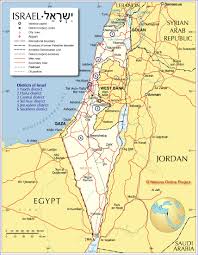
My plan would be a two state solution with the sharing of Jerusalem. I would maintain the boundaries as the currently are, for the sake of not redrawing them again and having to move people. I would require that all of the Israelis who are settled in the West Bank to LEAVE immediately. I would close all of the settlements there, and return the settlements' land to the Palestinian authority. Palestine would have to have a democratic and legitimate government, and that would be one of my first requirements before the plan would be implemented!!!
Next I would require that all governance and national administration for BOTH the Israeli side and the Palestinian side be completely vacated from Jerusalem. That means, while drastic, that the Israelis cannot have their capital in Jerusalem and the same for the Palestinian government. I believe that the next step would be to issue passports to the Palestinians, recognized by the Israelis and the rest of the world! Additionally, there should be free travel both to and from Israel and the West Bank for both passport holders!
I believe that people like Amer's family should be paid for the loss of their land. This clearly will create much friction; but those who have occupied houses and land of other people should have to pay for it, even if that requires multiple mortgages etc.
Clearly this is not a win win situation, but regarding this dispute, I do not see viable win win situations!
Sunday, April 24, 2011
Armstrong 14-18
What a vast portion of history she covered in these 135 pages. I was amazed exactly how fast we came upon the modern part of this history. She was talking about Jihad, the Spanish Inquisition, and the Ottoman take over, and all of a sudden, 3 chapters later, she mentioned Binyamen Herzel and zionism in the late 1800s and we were in modern history. Dr. Horowitz said Wednesday, you all will be surprised how fast you are in modernity; that was right.
This was very valuable book for me to read. Obviously Armstrong said the repetitive things, left out details (she had to!), jumped from one issue to the next in two sentences, however she did cover roughly 4000 years of history in 430 pages. I enjoyed the book, I guess the right thing to do is consider it as ONE single source in a world of a million points of view. But in-exhaustive as it may be, I can say that I learned much from reading this book. I had many many gaps, per se, in my knowledge of this city and about Israel/Palestine in general. Armstrong's book filled them in! I can now recite the difference between the "Six Day War" and the "Yawm Kibbur War," and their approximate dates. I had previously heard these histories from different people including a Jewish friend of mine from Havard and a Maronite Lebanese Professor friend from NYU. As you can imagine, their perspectives were different as were their recount of the happenings of these wars. Not to say that Armstrong was unbiased regarding those two wars, its just her perspective of them is jaded differently from my two colleagues.
I found mostly in reading this book, I did indeed google search several different concepts. For example, when there was a topic mentioned in the book, of which I had not heard, I searched it which taught me more than just the words that Armstrong put on the page.
This was a worthwhile book!
This was very valuable book for me to read. Obviously Armstrong said the repetitive things, left out details (she had to!), jumped from one issue to the next in two sentences, however she did cover roughly 4000 years of history in 430 pages. I enjoyed the book, I guess the right thing to do is consider it as ONE single source in a world of a million points of view. But in-exhaustive as it may be, I can say that I learned much from reading this book. I had many many gaps, per se, in my knowledge of this city and about Israel/Palestine in general. Armstrong's book filled them in! I can now recite the difference between the "Six Day War" and the "Yawm Kibbur War," and their approximate dates. I had previously heard these histories from different people including a Jewish friend of mine from Havard and a Maronite Lebanese Professor friend from NYU. As you can imagine, their perspectives were different as were their recount of the happenings of these wars. Not to say that Armstrong was unbiased regarding those two wars, its just her perspective of them is jaded differently from my two colleagues.
I found mostly in reading this book, I did indeed google search several different concepts. For example, when there was a topic mentioned in the book, of which I had not heard, I searched it which taught me more than just the words that Armstrong put on the page.
This was a worthwhile book!
Tuesday, April 19, 2011
Jerusalem from Muslim Influence to the Crucades
This is the part of Jerusalem's history which I am better familiar with. From studying history of the Arabs, the Jahilliya, and MuHammad's first waHee, I can say I had a better handle on what was going on with the Arabs at this time than with the Judeo-Christian perspective from before.
I was familiar with when MuHammad received his first inspiration from the angle Gabriel in the cave in Northern Saudi Arabia; however, I was unfamiliar with the night journey. I mean I had heard about it, but I did not know that he is said to have ridden the horse Burqaa2. From this reading, I can better understand the meaning of Jerusalem to the Muslim tradition.
I did not know/understand why that city was important to the Muslims. I mean I had heard of the Caliph who built the Dome of the Rock. But I did not know that the khulafaa2 al rashideen had goings on in Jerusalem. I guess I had thought that they were just hanging out in Damascus or Baghdad, like the Ummayids or Abbassids, respectively! But it was interesting to have their history cemented in my mind with respect to Jerusalem. I think I can have better grip on what they did there.
Those Caliphs really did interact with the ancient holy sites! For instance Armstrong does mention how the Caliphs 'Umar and 'Uthman respected the temple mount area, that is why there is masjid al 'aqsaa and qubbat al sakhra there now. I was not awar of the term "dhimmis," which is apparently a term which means non-muslims (jews and christians) living in and around Jerusalem who had to pay taxes to the Muslim regimes. I did not know that that the the Muslim Caliphs controlled Jerusalem. This was a good learning experience.
I was familiar with when MuHammad received his first inspiration from the angle Gabriel in the cave in Northern Saudi Arabia; however, I was unfamiliar with the night journey. I mean I had heard about it, but I did not know that he is said to have ridden the horse Burqaa2. From this reading, I can better understand the meaning of Jerusalem to the Muslim tradition.
I did not know/understand why that city was important to the Muslims. I mean I had heard of the Caliph who built the Dome of the Rock. But I did not know that the khulafaa2 al rashideen had goings on in Jerusalem. I guess I had thought that they were just hanging out in Damascus or Baghdad, like the Ummayids or Abbassids, respectively! But it was interesting to have their history cemented in my mind with respect to Jerusalem. I think I can have better grip on what they did there.
Those Caliphs really did interact with the ancient holy sites! For instance Armstrong does mention how the Caliphs 'Umar and 'Uthman respected the temple mount area, that is why there is masjid al 'aqsaa and qubbat al sakhra there now. I was not awar of the term "dhimmis," which is apparently a term which means non-muslims (jews and christians) living in and around Jerusalem who had to pay taxes to the Muslim regimes. I did not know that that the the Muslim Caliphs controlled Jerusalem. This was a good learning experience.
Monday, April 18, 2011
Response to Parallels and Paradoxes
Miss. Said,
Question 1: I am just curious about literary criticism. What sort of drew you to the field? Did you grow up reading a great deal of literature and just developed a critical mind toward the authors? Or did you need to study, in depth in a formal education, literature and its elements to be able to have basis for your work as a critic?
Question 2: Might you know why your late husband and Mr. Barenboim decided to utilize an orchestra as a way to bring together the youth of the Israeli/Palestinian divide?
Response to readings:
The article written by Noura Dabdoub had some great points in it, as she discuses the idea of a homeland! This piece seems to be unbiased, and sort of lays out a narrative of what has happened in modern history since the founding of the state of Israel. It was good to see the quote from the Israeli constitution. I have never actually read that document, so it was thought provoking to read that small excerpt from it. From that small paragraph, I can see Israeli patriotism taking form. I guess I compare it to our own constitution, in the the USA, our constitution is the backbone of our patriotism!
You really gave us a good mix of history in that article. I think it would be difficult to put a lot of history in a paper like this with limited space.
Parallels and Paradoxes:
This article raises a few questions. I thought that the way it was written was very positive and upbeat about the Israeli/Palestinian conflict. I could not help wondering why the writer steered clear of talking about what the issues, between the two sides, really were.
I feel like as he wrote this, Mr. Guzelimian maybe overemphasized the friendship between Mr. Said and Mr. Barenboim. I realize that they were probably good friends, its just maybe the author could have said: these gentlemen and their friendship is a model which all Palestinians and Israelis should/could follow.
I certainly agree that we need to encourage friendship between the two sides. I feel like that would be a great way to step towards peace. My issue with this article is, maybe let us not overlook the bleak nature of the conflict right now! Maybe people like Mr. Guzelimian can and should remain positive, but also criticize the situation now.
I certainly do not think Mr. Guzelimian overlooked the conflict in Israel and the West Bank, I think he probably wanted to emphasize the friendship between Mr. Said and Mr. Barenboim. That is probably fair, the article is about their accomplishments and not about the strife!!!
Question 1: I am just curious about literary criticism. What sort of drew you to the field? Did you grow up reading a great deal of literature and just developed a critical mind toward the authors? Or did you need to study, in depth in a formal education, literature and its elements to be able to have basis for your work as a critic?
Question 2: Might you know why your late husband and Mr. Barenboim decided to utilize an orchestra as a way to bring together the youth of the Israeli/Palestinian divide?
Response to readings:
The article written by Noura Dabdoub had some great points in it, as she discuses the idea of a homeland! This piece seems to be unbiased, and sort of lays out a narrative of what has happened in modern history since the founding of the state of Israel. It was good to see the quote from the Israeli constitution. I have never actually read that document, so it was thought provoking to read that small excerpt from it. From that small paragraph, I can see Israeli patriotism taking form. I guess I compare it to our own constitution, in the the USA, our constitution is the backbone of our patriotism!
You really gave us a good mix of history in that article. I think it would be difficult to put a lot of history in a paper like this with limited space.
Parallels and Paradoxes:
This article raises a few questions. I thought that the way it was written was very positive and upbeat about the Israeli/Palestinian conflict. I could not help wondering why the writer steered clear of talking about what the issues, between the two sides, really were.
I feel like as he wrote this, Mr. Guzelimian maybe overemphasized the friendship between Mr. Said and Mr. Barenboim. I realize that they were probably good friends, its just maybe the author could have said: these gentlemen and their friendship is a model which all Palestinians and Israelis should/could follow.
I certainly agree that we need to encourage friendship between the two sides. I feel like that would be a great way to step towards peace. My issue with this article is, maybe let us not overlook the bleak nature of the conflict right now! Maybe people like Mr. Guzelimian can and should remain positive, but also criticize the situation now.
I certainly do not think Mr. Guzelimian overlooked the conflict in Israel and the West Bank, I think he probably wanted to emphasize the friendship between Mr. Said and Mr. Barenboim. That is probably fair, the article is about their accomplishments and not about the strife!!!
Tuesday, April 12, 2011
Analysis of chapters 8 and 9, Aelia Capitolina and The New Jerusalem
I fell like in these two chapters, she just delves right into the content. I find it difficult to go from one chapter to the other, because it is almost as if she is trying to follow the sequence of time, but she does not do a good job of tying all of the events together. I sort of loose track what is happening at what times. She starts mentioning random names, which I do remember, like Titus, Vespasian, and Hadrian and mentions a few important things which those guys did, but she does not come out and say this is the order that they were in.
Maybe the onus is on me! When I am reading this book, I sometimes have to search events, people, and actions which she mentions to sort of connect everything for myself. I feel like she throws so much detail, which is good, but as she is dumping events and names on the reader I am not understanding the connections. It is like we were talking about the Babylonians a chapter ago, which she did not explain what was going on and why they invaded Jerusalem, and then all of a sudden the Romans pop up and they are trying to conquer the city.
On page 163, she starts mentioning Bar Koseba and his revolt, but she spends hardly any time on him, yet still mentions his uncle/priest. To me, the questions is, why does she mentions details like his uncle but wont further talk about Bar Koseba? Apparently this revolt was because the Israelites were fired up about something, then the Romans quashed their rebellion. She says that after this, the Jews were a "defeated race." Is it right to call the Jews a race? I think so, but I have heard that some people do not consider them a race because they come from Judaism which is a religion.
Maybe the onus is on me! When I am reading this book, I sometimes have to search events, people, and actions which she mentions to sort of connect everything for myself. I feel like she throws so much detail, which is good, but as she is dumping events and names on the reader I am not understanding the connections. It is like we were talking about the Babylonians a chapter ago, which she did not explain what was going on and why they invaded Jerusalem, and then all of a sudden the Romans pop up and they are trying to conquer the city.
On page 163, she starts mentioning Bar Koseba and his revolt, but she spends hardly any time on him, yet still mentions his uncle/priest. To me, the questions is, why does she mentions details like his uncle but wont further talk about Bar Koseba? Apparently this revolt was because the Israelites were fired up about something, then the Romans quashed their rebellion. She says that after this, the Jews were a "defeated race." Is it right to call the Jews a race? I think so, but I have heard that some people do not consider them a race because they come from Judaism which is a religion.
Sunday, April 10, 2011
Chapters 5-7
Chapters 5-7 began the discussion on the diaspora of the Jews in late BC. I thought that these chapters were slightly more dry than the ones before; they probably had the same amount of details as before, however I just did not enjoy them as much.
The maps in these chapters are a good frame of reference to show us what was where, at this time period. I do understand where the old city's walls are currently, however every time I open this book it shows me more about what was where in the old city. I did not realize that Golgatha was outside of the Upper City and the Lower city, but is inside of the current city walls. It is kind of confusing to think where is all of this stuff. I did know that Christs' tomb and Golgatha were outside of the old city, but now they are inside of the current "old city."
The author also describes how the city and region of Israel was governed and controlled, after popular kings like Solomon and David. I did not realize that the guys like Ezekiel and Nehemiah actually had a lot of political influence. I thought that they were just writer/scribes, but the way she describes them, they seemed like more than laymen.
Not to go out of chronological order, but I just remembered from chapter 5 she talks about the destruction of Solomon's temple with the loss of the gold and cedar trees. This destruction happened, only to be rebuild by Herrod years later. I still do not understand how Herrod's reconstruction was said to be the second temple but she says it was the actual third temple? I got lost on who built the second temple and why Herrods temple was not considered the third? Moreover, why was it important for Herrod's temple to be the second and not the third? Pg. 128-129
The maps in these chapters are a good frame of reference to show us what was where, at this time period. I do understand where the old city's walls are currently, however every time I open this book it shows me more about what was where in the old city. I did not realize that Golgatha was outside of the Upper City and the Lower city, but is inside of the current city walls. It is kind of confusing to think where is all of this stuff. I did know that Christs' tomb and Golgatha were outside of the old city, but now they are inside of the current "old city."
The author also describes how the city and region of Israel was governed and controlled, after popular kings like Solomon and David. I did not realize that the guys like Ezekiel and Nehemiah actually had a lot of political influence. I thought that they were just writer/scribes, but the way she describes them, they seemed like more than laymen.
Not to go out of chronological order, but I just remembered from chapter 5 she talks about the destruction of Solomon's temple with the loss of the gold and cedar trees. This destruction happened, only to be rebuild by Herrod years later. I still do not understand how Herrod's reconstruction was said to be the second temple but she says it was the actual third temple? I got lost on who built the second temple and why Herrods temple was not considered the third? Moreover, why was it important for Herrod's temple to be the second and not the third? Pg. 128-129
Tuesday, April 5, 2011
Chapters 1-4
Chapters 1-4 were very long. 80 pages is a lot of material, however with respect to Jersualem's history, it probably is fitting. I thought that the material seemed pretty dense, however in the same breath refreshing. It was fantastic to have the history, of what is present day Israel, compiled in front of me. I thought it was mostly holistic, or at least as complete as four chapters can be on history.
Karen Armstrong does thorough job of summarizing of the people who controlled the land North of the Sinai and West of Jordan during the time before Christ. Obviously it is impossible to know exactly who controlled what piece of land when. However, she does give the less-informed reader a solid frame of reference.
These chapters are pretty much the reason why I chose to take this course. I wanted the old history of the conflict. From my education in Arabic history, I understand what was going on in that region starting in the late sixth century, however prior to that I was not well informed.
Her perspective, or at least the third person viewpoint, from which she writes is kind of like she is narrating what is happening from a non-bible viewpoint. What I mean is that, my perceptions of the Israelites, at this time period, is mostly from a christian, old testament education. This piece allowed me or showed me how to look at the Israelites exodus from Egypt, in a different way.
Karen Armstrong does thorough job of summarizing of the people who controlled the land North of the Sinai and West of Jordan during the time before Christ. Obviously it is impossible to know exactly who controlled what piece of land when. However, she does give the less-informed reader a solid frame of reference.
These chapters are pretty much the reason why I chose to take this course. I wanted the old history of the conflict. From my education in Arabic history, I understand what was going on in that region starting in the late sixth century, however prior to that I was not well informed.
Her perspective, or at least the third person viewpoint, from which she writes is kind of like she is narrating what is happening from a non-bible viewpoint. What I mean is that, my perceptions of the Israelites, at this time period, is mostly from a christian, old testament education. This piece allowed me or showed me how to look at the Israelites exodus from Egypt, in a different way.
Sunday, April 3, 2011
Historical readings for second week of class
These readings were very much insightful. I feel like I had a better than average knowledge of Jerusalem's history and the Arab-Israeli conflicts before; however, these few articles, specifically Pressman's really brought everything together.
I realize that these four articles/papers are written by people who are certainly involved personally in the conflicts, however the degree of biased that one might assume to detect throughout each piece, in my opinion, is not extraordinarily present. I expected much more one sided information. In my opinion Pressman's piece wraps up or summarizes Israel from 1861 to 2005. I totally enjoyed reading his piece, I felt as if all of the important names in contemporary Arab World history were defined and discussed. People like Ben Gurion, Gamal 3bd Al Nasser, 7afiz Al 'Assed, Bill Clinton, Yasser Arafat and the like, obviously played key roles in the so called peace process or road to such which our leaders have tried to establish. It was very beneficial to read about all of these people, sort of combined, in one article. From my perspective, the author takes a microscope and points it towards Israel and the Arab World and discusses what happened from the onset of modern conflict in May of 1948, up until now.
The way that Reba V Rubin articulates Jerusalem from the era of the Jebusites and Babylonians is also very beneficial. I remember some of these names from studying the Old Testament, when I was younger, however reading about the Assyrians and Philistines and Caananites helps to bring who those people are into understanding. I certainly remember studying those peoples, but I did not know that the Jebusites were a group outside of Jersulames walls, in the suburbs who are relatives of modern Palestinians.
These articles were very valuable.
I realize that these four articles/papers are written by people who are certainly involved personally in the conflicts, however the degree of biased that one might assume to detect throughout each piece, in my opinion, is not extraordinarily present. I expected much more one sided information. In my opinion Pressman's piece wraps up or summarizes Israel from 1861 to 2005. I totally enjoyed reading his piece, I felt as if all of the important names in contemporary Arab World history were defined and discussed. People like Ben Gurion, Gamal 3bd Al Nasser, 7afiz Al 'Assed, Bill Clinton, Yasser Arafat and the like, obviously played key roles in the so called peace process or road to such which our leaders have tried to establish. It was very beneficial to read about all of these people, sort of combined, in one article. From my perspective, the author takes a microscope and points it towards Israel and the Arab World and discusses what happened from the onset of modern conflict in May of 1948, up until now.
The way that Reba V Rubin articulates Jerusalem from the era of the Jebusites and Babylonians is also very beneficial. I remember some of these names from studying the Old Testament, when I was younger, however reading about the Assyrians and Philistines and Caananites helps to bring who those people are into understanding. I certainly remember studying those peoples, but I did not know that the Jebusites were a group outside of Jersulames walls, in the suburbs who are relatives of modern Palestinians.
These articles were very valuable.
Tuesday, March 29, 2011
First days reading
Regarding the first week of class, I am excited for the experience of how this course will be run. I thoroughly enjoy topics of the Middle East, and certainly Israel/Jerusalem are at the center of issues of that subject. The web based curriculum is different than what I am used to, I am usually a textbook and pencils kind of person; however, I want to continue my education in the future, and that capacity will probably be through the internet. So this class should be of certain value, for me, in that regard.
As for the readings, I will be candid, I really expected to delve into the issue of Jerusalem. I am excited to start studying the history of that ancient city, but I felt that these articles are probably a lead up to when we start the more interesting stuff. I realize that we have to have a basis on where this course came from, like all of the stuff that took place in Washington D.C., the Smithsonian and the different culture societies, however I would like to get into the interesting material. I have little experience with folklore, so the material on that was kind of wasted on me. As I said I feel like all four of these articles are a wind up, for what is to come.
Certainly, the readings were informative; I feel like they mostly explain where this class came from and whose ideas developed it.
I thought that Saud Amiry had it right, when she mentions the varying fields in Jersualem. As she mentions the rituals, music, archaeology, food, crafts, and so on, she is setting the stage for further explanation of the city. She also, is giving a backdrop or almost a picture of where this city comes from. So I suppose that those examples and the other mentions of folklore are probably reasonable at the beginning of this course.
What I take away from these pieces, is that Jerusalem is multi-cultural, with Armenians, Arabs, Jews, Christians and Bedouins. Basically, in my opinion, all of the authors say that that city is filled with mixture.
As for the readings, I will be candid, I really expected to delve into the issue of Jerusalem. I am excited to start studying the history of that ancient city, but I felt that these articles are probably a lead up to when we start the more interesting stuff. I realize that we have to have a basis on where this course came from, like all of the stuff that took place in Washington D.C., the Smithsonian and the different culture societies, however I would like to get into the interesting material. I have little experience with folklore, so the material on that was kind of wasted on me. As I said I feel like all four of these articles are a wind up, for what is to come.
Certainly, the readings were informative; I feel like they mostly explain where this class came from and whose ideas developed it.
I thought that Saud Amiry had it right, when she mentions the varying fields in Jersualem. As she mentions the rituals, music, archaeology, food, crafts, and so on, she is setting the stage for further explanation of the city. She also, is giving a backdrop or almost a picture of where this city comes from. So I suppose that those examples and the other mentions of folklore are probably reasonable at the beginning of this course.
What I take away from these pieces, is that Jerusalem is multi-cultural, with Armenians, Arabs, Jews, Christians and Bedouins. Basically, in my opinion, all of the authors say that that city is filled with mixture.